
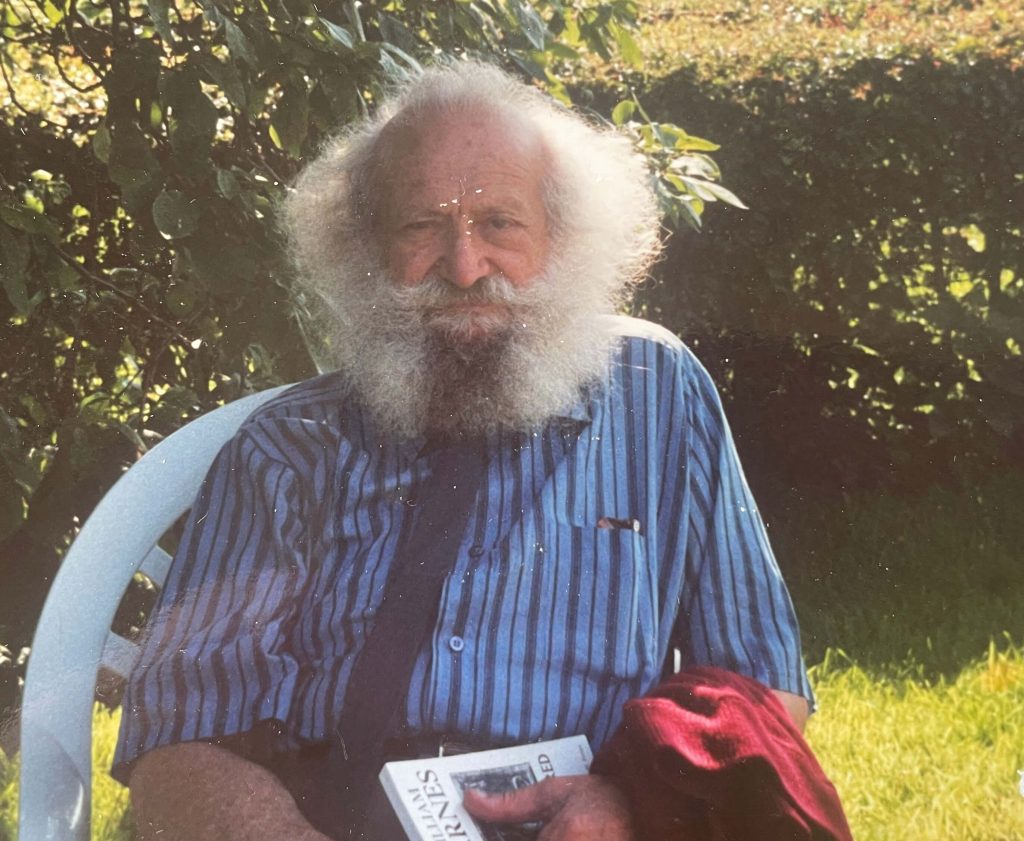
I met Carl Cowl for the first time in 1982 and for the next 15 years, until his death at the age of 97, we were good friends. He was a polymath: an internationally famous musicologist, a very decent pianist, a scholar of Yiddish, Hebrew and Arabic, and a trained lathe operator. He was a lifelong socialist and in later life had grown a beard large enough to give him a startling resemblance to the older Karl Marx. Indeed, on one occasion he caused a sensation when asked to speak from the floor of a conference, in response to the chair saying “Carl?”.
He was also a good friend to generations of colleagues, companions and comrades.
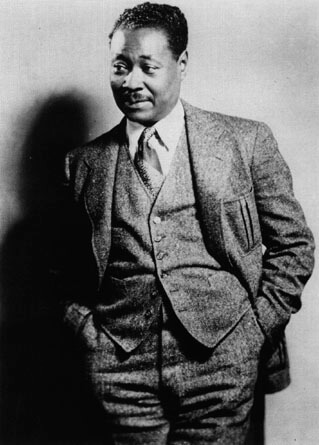
One of these, he first met in the early 1920s when he was an office boy at the “Liberator” magazine. Claude McKay was a journalist, and poet and would become a novelist. Through distance and separation, and finally close contact again, Carl and Claude became good friends to such an extent that Claude asked Carl to be his literary executor. From Claude’s death in 1948, until his death nearly fifty years later, Carl defended the reputation of the once-famous, now-forgotten novelist during the times when his work was ignored and denigrated.
I was interviewing Carl about other aspects of his life when I asked a casual question about Claude. The answer was ebullient, enthusiastic and long. Indeed, that answer spread in instalments over several days. That love for Claude, and I do believe that Carl loved him in ways that so many loved Claude, turned me from someone who taught Claude’s “one famous novel” into
someone with a lifelong fascination with this endlessly surprising man. Endlessly surprising, because now that he has become – for good and not-so-good reasons – the object of academic study and research, the amount and nature of the material relating to his life and work has expanded and continues to expand.
When Carl died shortly after one of his weekly phone calls from Brooklyn, I flew to New York to help his son clear the apartment of the many books his father had accumulated in 80 years of eclectic book-buying. Part of Carl’s legacy to me, aside from the friendship and inspiration he provided over the years, was 2,500 books. Once specific bequests were organised, there was no restriction on what I might take.
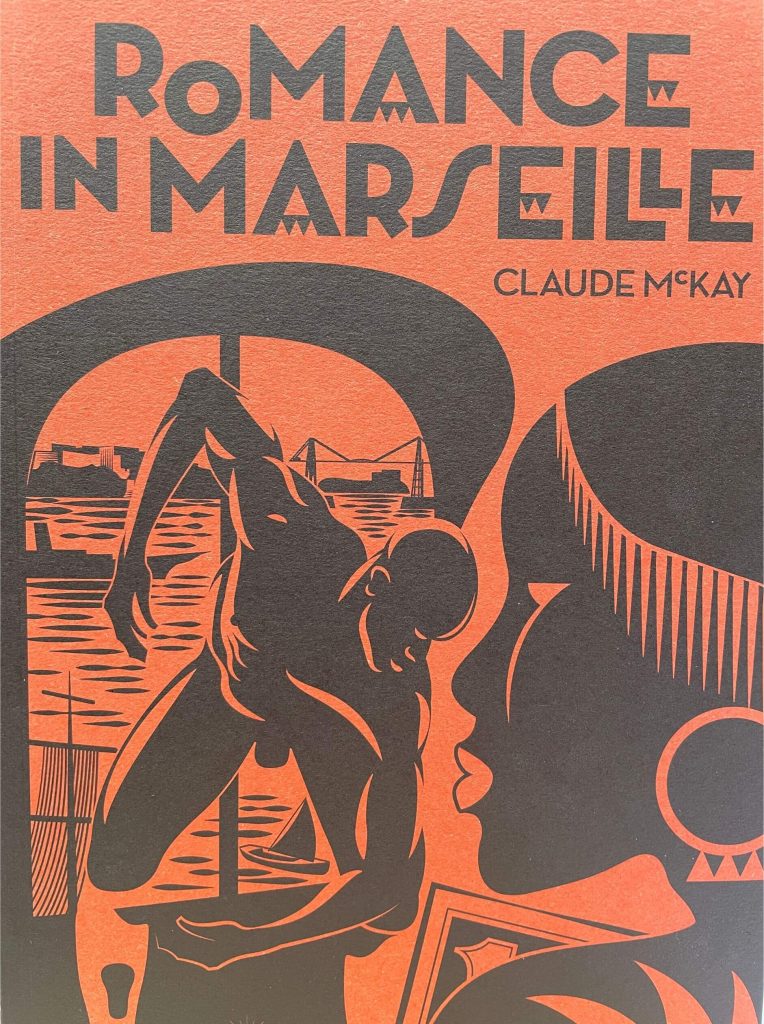
This is how I came to be the guardian of a number of Claude McKay’s books. Books that Claude owned. Copies of his own books, some in very early translation, and copies of books given to him by other people. This latter group sketched out Claude’s network of friends and companions in the years after his first fame faded.
I called myself the guardian of the books because I didn’t think of them as my possessions. Rather, I was giving them a place to be until …
Until the protean reputation of Claude McKay changed.
Books have no life, no existence, without readers. That is obvious. Yet those readers have an integral part in making the meanings of the text. They read, and they see what they see and understand from within a framework determined by their place in history.
For Claude this meant, and continues to mean, a volatile reputation. His glorious celebrations of the underworlds of New York and, later, Marseille resonated in the late 1920s but in the sober days of the 1930s he languished. His last novel, written in the early 1940s, lay undiscovered in a filing cabinet owned by a New York pornographer(!) until it was unearthed in 2018.
His last Marseille novel, in a draft version, went unpublished until the 2020s. When it was finally published the New York Times reviewer called it the ‘most important novel of the year’. And yet when I had tried to find a publisher in the 1990s it was rejected as “too left wing, too black, too sexy, too queer, too Muslim, well just too everything”. Readers see what they want to see. And
what readers saw in 2020 was a novel that celebrated the fluidity of sexual identity. Context is everything.
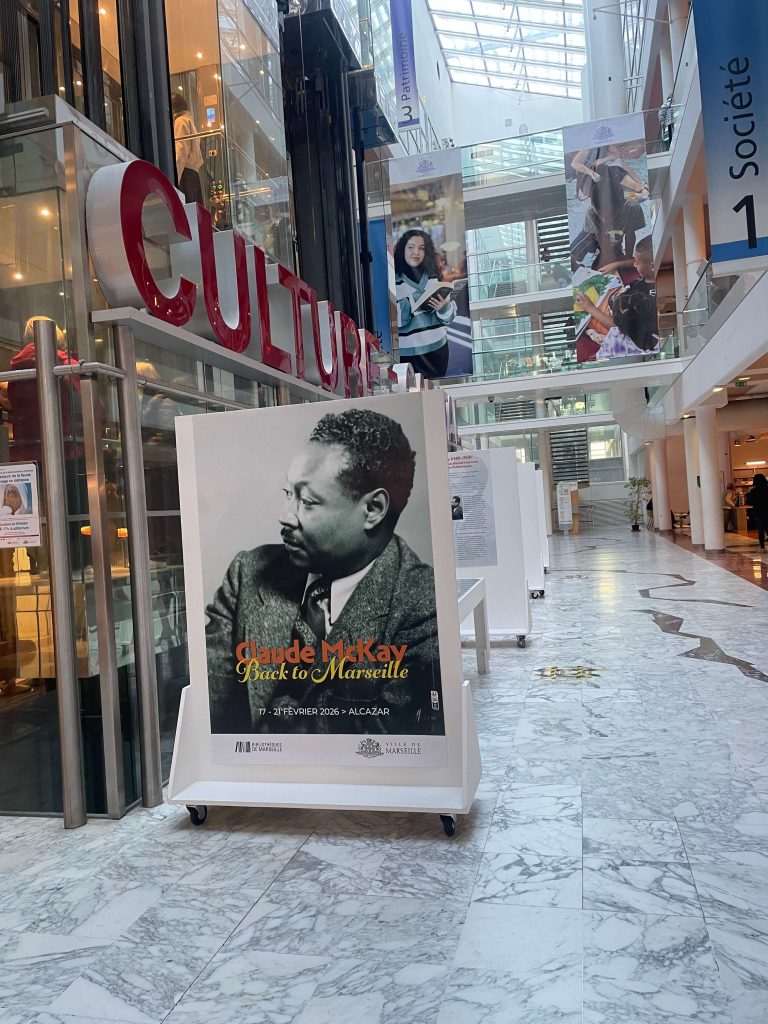
Then something else changed. My connections to Marseille have strengthened over the last four years, and after some negotiation I agreed to donate all of the books to the Bibliothèque Alcazar. Which is the second largest public library in France, after the Bibliothèque National in Paris. A new director; a new special collections curator; both were enthusiastic and made the transfer of the books a celebration of Claude McKay’s writing and living existence in the city and his connections to a range of intellectuals largely neglected by Anglophones.
The transfer of the books also became a celebration of the city itself, and its place as the capital of the South. It is not only a Provençal city, where these days there are rock bands who sing in Occitan, the original langue d’oc. A different country celebrated by Ford Madox Ford and MRK Fisher. It is also nearly the same distance from Algiers as it from Paris. And it is a port city. All
of which makes it somewhere other than the cities of northern France. For the conference in the main foyer of the library, they arranged a display of the books. I sat and watched the people passing. Many of them – many more than was usual, the librarians told me – stopped to look. One woman standing next to me, turned and said “C’est formidable”. It was.
I started out in my academic/intellectual/university life (I do think the three terms are related but not similar) I was an Americanist. I studied American literature, I studied in the United States. I wrote about American writers. But two developments in the last 30 years have changed my priorities. The obvious and larger development is the degradation of political and public life in the USA. What clearer marker could there be than the transition from Jimmy Carter’s presidency to the present incumbent? Of course, resistance to this tide of bigotry, prejudice and burgeoning totalitarianism exists, and I celebrate it.
The other, more personal, matter was the changes in my thinking about Claude McKay. He started, for me, as a novelist of the Harlem Renaissance. “Home to Harlem” was a best-seller. Yet he wrote it in Marseille. “Banjo” was set and written in Marseille. “Romance in Marseille” was written in Morocco. His poetry moved through an astonishing range of voices, from that of a constable in the Jamaican police writing in Jamaican English to poems raging against the racism of post-WW1 USA but written in sonnet form and on to a long sequence of devotional poetry in later years.
What all of this, and more, has taught me is that no easy single category can contain this man. He was a revolutionary socialist who converted at the end of his life to Catholicism. Yet that is not, as I am arguing in a longer piece I’m writing at the moment, the old story of moving towards conservatism while aging. Again, context is all and these contexts tangle into a complex web of connections, gradations, historically specific political stances that can become distorted when viewed through the lens of the present.
And always, there is the writing. I have recently been having a long conversation with a translator about Claude’s use of one word in one poem as he makes new (and despite his protestations, I would argue better) translations. That one word, in one poem, reminds me again of the fluent careful quality of Claude’s writing.
For me, and for so many I have come to know in Marseille who celebrate his writing, he is always “Claude”, and for us never “McKay”.